



Carol Johnson, Southern Indiana Business Report
LOOGOOTEE – Changes to Indiana high school graduation requirements won’t take effect until the Class of 2029, but high schools are preparing now for those changes that will include a work-based learning requirement.
Students will choose from three categories – enrollment, enlistment or employment – and six readiness seals. Depending on the category, students must complete 75, 150 or 650 hours of work-based learning or 100 hours of public service for the enlistment honors seal plus during their four years of high school.
The new diploma also increases the required credits from the current 40 to 42.
Work-based learning, in the form of apprenticeships, internships or job shadowing, is not new for Indiana high schools. Career centers provide internship opportunities, and programs like Regional Opportunity Initiatives’ UpSkill Work and Learn program gives high school students the chance to explore career pathways. Martin and Daviess counties also offer the CEO program, a year-long exploration into careers and business ownership.
But the graduation changes will mean more students will need these experiences and that means schools will need more employers to open their doors to student interns.
Loogootee High School currently has 26 seniors – about half the senior class – interning at businesses in the community. Principal Nancy Harrison is laying the groundwork now to bring more businesses into the school’s network of partners. Harrison plans to create an advisory board made up of local businesses to build up the pathway pipeline, and the school will host a Professional Day for students who will be interning to prepare them for their internships.
“We’re in a good place. We are lucky that in Loogootee we have a lot of good businesses that support us,” Harrison said. “But it will take more businesses to be able to match students with their career interests.”
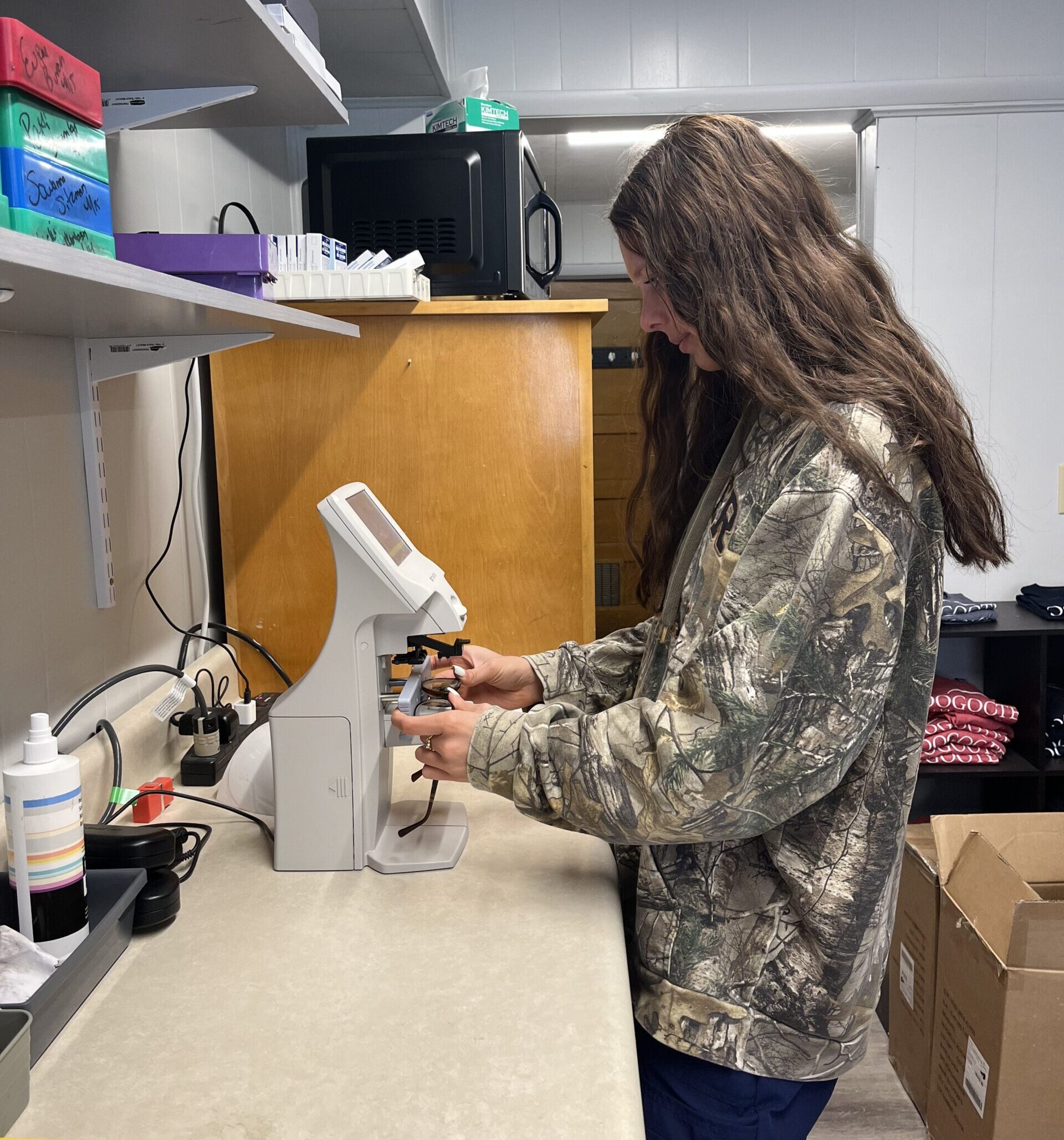
More students engaged in work-based learning can be beneficial for everyone. For businesses, hosting student interns can serve as a long-term investment in workforce development.
“The internship experiences can open students’ eyes to all the local career opportunities that are here, and hopefully, students will continue to work here after high school graduation or return back to Martin County to work after graduating college,” Harrison said.
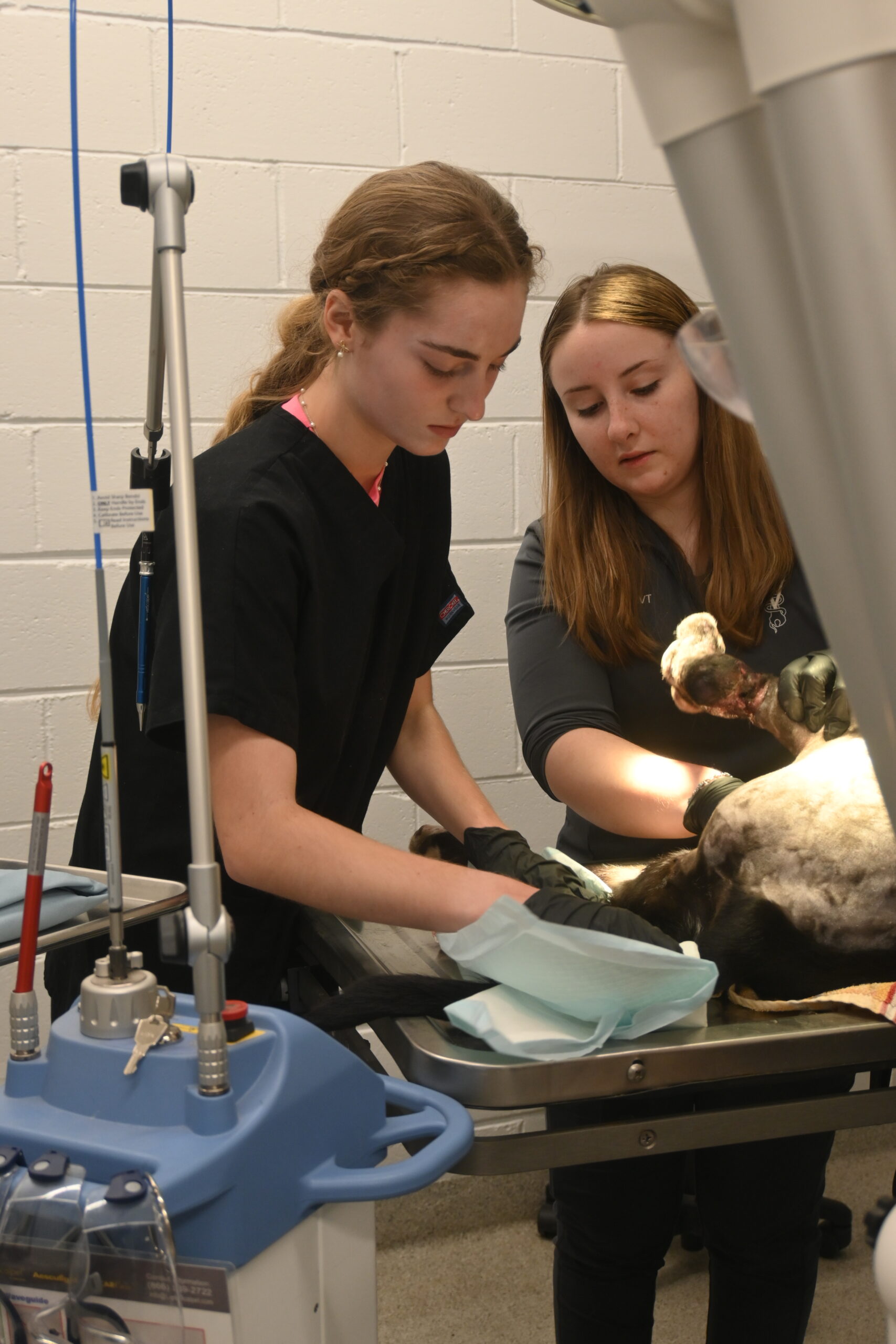
At Orleans High School, guidance counselor Kate Jones said the school has a robust internship program with almost half of the senior class interning for two periods every other day. She said the school is already making plans to grow the program for next year.
“We have a lot of kids interested in health care,” Jones said. “IU Health has been awesome working with our students and providing them experiences while following the rules of their organization.”
Jones said OHS has a culinary/hospitality program and several students have worked at the French Lick Resort to get real-world experience.
Students have to show they are ready for an internship. Jones said students take part in interviews and receive information about the expectations of an internship.
“We want to place them, but we also want to make sure they are a good fit,” Jones said.
Work-based learning can go a long way to help students determine whether it’s a job they want to pursue or not, and Harrison stressed that’s a great thing for students, even if it’s finding out the career is not for them.
Jones agreed and said it’s not unusual for a student to choose a pathway only to find out that it’s absolutely not what they want to do. Such discoveries, Jones said, will save the student time and money down the road.
Keeping up with changing career trends can definitely be a challenge, especially for small rural communities.
“Every year it changes what students are interested in. Next year we have a student who wants to learn about insurance, a few are interested in sonography,” Jones said.
Heather Hawkins, LHS guidance counselor, said students have shown interest in a variety of careers ranging from business to ministry to cybersecurity. Finding an internship location for such interests can be a challenge.
Jones said Orleans is focused on expanding its program but also making sure the school has the capacity to manage more students in work settings.
“We have willing partners in our community and communities around us, but when we flood the market with so many more students, will we still have those same opportunities?” she said. “We want to make sure it moves the students toward what they want to accomplish.”
Career exploration
Daviess Community Hospital is a strong supporter of work-based learning in Martin and Daviess counties.
Melissa Potts, acute care manager at DCH, said the hospital currently has around 90 interns, about 40 of them are high school students. The health care field has dozens of specialties and careers; Potts said hospital staff meets with students to gauge their interests.
She said a student from Loogootee was exploring a career in nursing. At DCH, she observed the med-surg and intensive care units, obstetrics and wound care.
“We love our students and are always eager to be part of any type of program that helps students interested in health care,” Potts said. “Hopefully this helps them in choosing a career and coming back to their hometown when they’re done with school.”
The majority of students will stay in their internship for a year, but students can switch if they discover the career is not for them.
“Sometimes students want to switch internship locations. In those instances, we first try to teach them perseverance and how to overcome difficulties,” Harrison said. “However, after working with them and the internship location, we do, at times, let a student move on from the experience just like people do in real life.”
Jennifer Hall is the intern supervisor and library/media specialist at OHS, where 24 students are currently interning at workplaces.
She said it can be a challenge, even for employers that support work-based learning, to meet the need for interns in small communities.
“There is pressure on the business community,” Hall said.
As an example, she said IU Health Paoli Hospital gets numerous requests from area high schools as well as Ivy Tech.
“There is lots of interest in health care. IU Health Paoli will accept three students from each school in Orange County, and they do a wonderful job with students, but that’s only three students per school and we have more than that interested in health care,” she said.
Students can travel to an internship if they have their own transportation, but that also cuts into the allotted time, which is about three hours.
For many employers, hosting a student is unknown territory. Hall said that’s why the school is clear about setting and managing expectations for the school, student and employer.
Hall pointed to internships that have been a win for students and the employers. Two OHS seniors have learned and grown so much during their internships that they have been offered summer jobs by the employers where they intern.
Diploma changes
The diploma redesign came as fewer Indiana high school graduates are enrolling in college. A little more than half of the state’s students are pursuing two-or four-year degrees when they leave high school, according to state data.
The diploma redesign, with the WBL requirements, will alter the high school experience.
Other curriculum changes include no longer requiring geometry and algebra 2 for a traditional diploma.
“A college-bound student can still go the traditional path of algebra 1-2 all the way through calculus,” Harrison said. “Not everyone needs to master algebra 2 to have a successful career.”
Harrison said there is an addition of two new required classes – communications and personal finance – which she said are both positive changes. Economics is no longer a required class, and students will need only 1 credit in physical education instead of the current 2 credits.
Students also can earn readiness seals, signifying additional completed work, on each of the three diploma tracks.
Harrison said next year’s freshman class schedules will look much the same as it has for decades, but after that first year, students will choose a diploma track.
Harrison said flexibility is built into the new requirements, which will allow for change. And students planning to attend college will be prepared when they graduate.
“We still want to provide rigor for whatever path students choose,” Hawkins said.
Students will have four years to accumulate WBL hours. Students who work part-time jobs can put those hours toward the requirement.
“It’s going to be a lot of challenges, but we’re going to find our way, and I think it will generate a lot of positives for our businesses, our school, and our community,” Hawkins said.
All high schools must implement the new graduation rules for the class of 2029, students who will be freshmen next school year. But high schools can phase in the new requirements starting next school year for other grade levels.