



Carol Johnson, Southern Indiana Business Report
The passage of Senate Enrolled Act 1 might have been good news for property tax payers who saw their tax bills surge in recent years, however, it is causing concern for municipal officials across Indiana as cities, counties and towns brace for a loss in revenue.
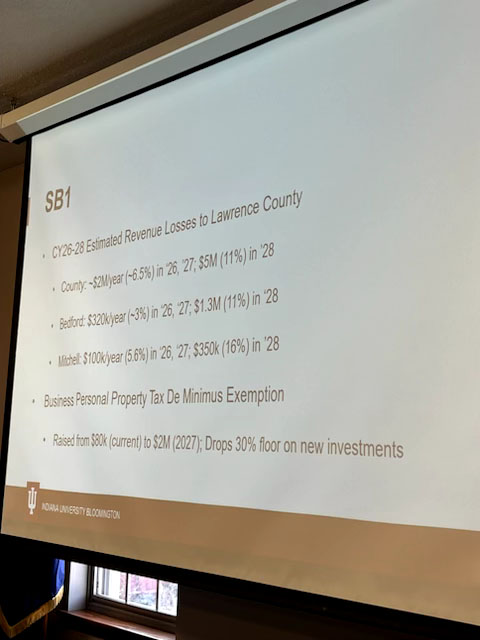
Municipalities use a portion of those taxes to fund their budgets for services that range from fixing sidewalks to paying police officers’ salaries. SEA 1 also changed the taxable threshold for business personal property taxes, raising the tax exemption threshold from $80,000 to $2 million in equipment and property. The loss of revenue will leave leaders of cities, towns and counties to face tough decisions regarding essential services and future investments.
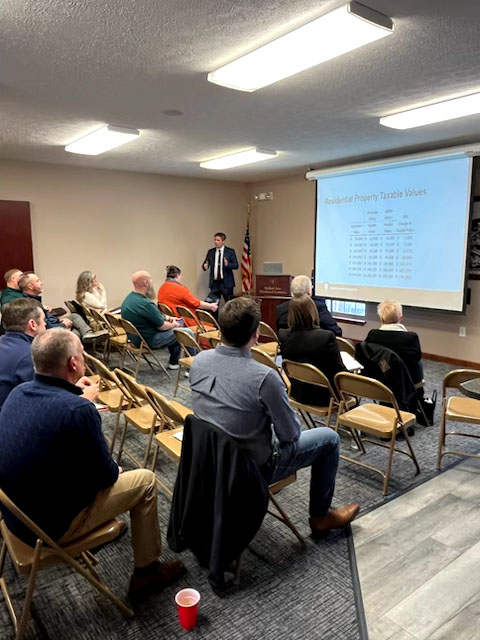
Last week an Indiana University professor spoke to a gathering of the Lawrence County Economic Growth Council about SEA 1, also referred to as Senate Bill 1. Justin Ross is a professor in the O’Neill School of Public and Environmental Affairs, specializing in state and local tax policy.
Ross said the state has, for years, had a complicated and unwieldy tax system. SEA 1 creates a clean slate. Under SEA 1, the average homeowner will see a $300 property tax decrease. To offset the loss, the legislation permits cities with populations of 3,500 or more to impose a 1.2% LIT for municipal services, while counties can implement a 1.2% LIT for county services.
Ross estimated the revenue losses to Bedford, Mitchell and Lawrence County governments will range from a low of 3% in 2026 to as much as 16% in 2028. It’s projected that the city of Mitchell will lose $100,000 in 2026; the city of Bedford’s revenue will drop $320,000 and Lawrence County could experience a loss of $2 million.
Dan Bortner, CEO of the LCEGC, said he invited Ross to speak to growth council members after hearing feedback from many members who are feeling the pressure of revenue losses.
“The work which the Lawrence County Economic Growth Council does has many facets, all geared towards improving the quality of life for those who call Lawrence County home,” Bortner said. “Senate Bill 1 enacted by the Indiana Legislature last year will affect how local units of government fund their basic operations. The Growth Council was excited to bring Professor Justin Ross from IU to help offer some ideas of how our local government units can prepare for the changes that are coming and how best to serve our communities.”
How communities respond to SEA 1 may take various routes, from hiring freezes to pausing building projects. For instance, funds for making improvements to streets will be affected. Some communities will lose out on INDOT’s Community Crossings Matching Grant program because they can’t afford the match necessary for the award.
During a time for questions, one participant summed up the frustration, “You’re either going to cut services or raise taxes, there are no other options.”
Ross encouraged local governments to seek the guidance of tax advisory firms like Baker Tilly to assist them in navigating the change and developing new rate structures.